
Fig & Rosemary Chutney
Because when you decide all of the figs need to come off the tree NOW, you immediately acquire a completely different problem: a fig glut ...
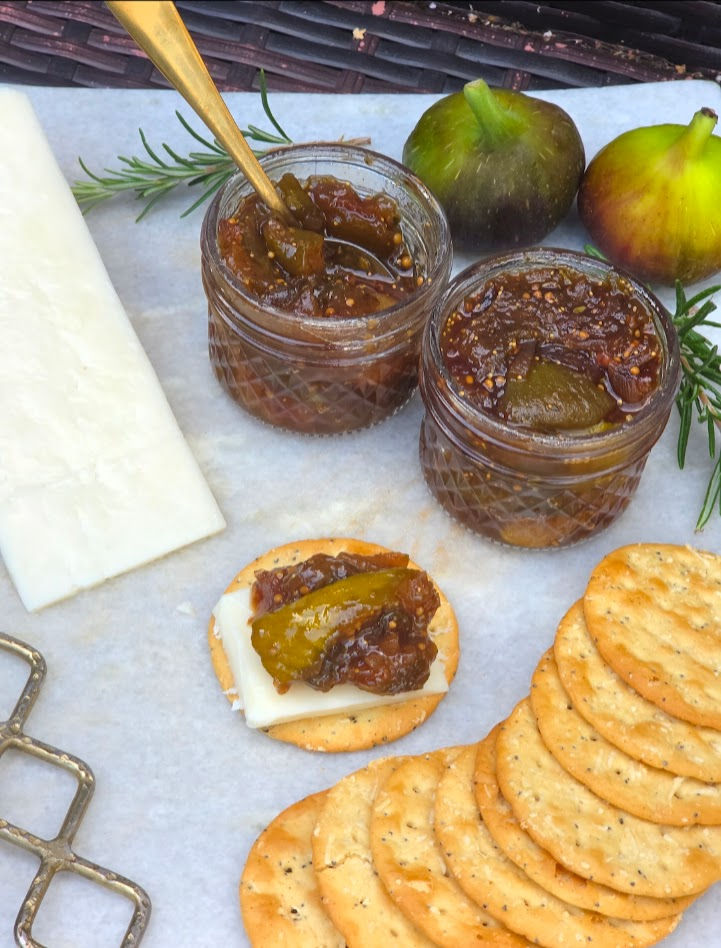
There are worse problems to have, admittedly. A basket overflowing with fat, ripe figs is a rather beautiful sight. Right up until you realise that there are only so many figs you can eat warm from the tree, only so many you can tuck into a tart, and that the fruit bowl is beginning to look less like an invitation to dinner and more like a very soft biological experiment. So, when faced with a fig glut, there is really only one sensible thing to do.
Get the preserving pan out.
This Fig & Rosemary Chutney is my answer to an overenthusiastic fig tree. Sweet, sticky and richly savoury, with the gentle acidity of cider vinegar, a little Somerset cider, mustard seeds and just enough rosemary to make you wonder what that lovely herby note is without it marching into the room shouting ROSEMARY!.
The figs are cooked slowly enough to soften and collapse around the edges, but I like to keep some little pieces intact. I want it thick and glossy, but still recognisably made from figs.
And, because I can't seem to leave well enough alone, there is a little apple in here too. It isn't essential, but it gives the chutney lovely body and helps with the natural setting thanks to the apple's pectin.
It is particularly good with cheese — especially a good Somerset cheddar or something properly creamy and soft — but don't stop there. Put it beside cold meats, spoon it into a toastie, or serve it with leftover roast pork or tuck a little alongside a terrine.
Fig & Rosemary Chutney - The Recipe
Ingredients
500g ripe figs, roughly chopped
150g red onion, finely diced
150g soft light brown sugar
150ml cider vinegar
75ml Somerset cider or apple juice
1 tbsp balsamic vinegar
1 tbsp mustard seeds
1 tsp fresh rosemary, very finely chopped
½ tsp ground ginger
½ tsp freshly cracked black pepper
½ tsp salt
1 small apple, peeled, cored and finely diced
A tiny pinch of chilli, optional
Method
Place the chopped figs, red onion, sugar, cider vinegar, Somerset cider, balsamic vinegar, mustard seeds, rosemary, ginger, black pepper and salt into a large, heavy-based saucepan.
Add the diced apple and, if you're using it, the tiniest pinch of chilli.
Give everything a good stir and leave it for a few minutes if you have the patience. The figs will begin to release some of their juices and the sugar will start to dissolve.
Bring the mixture slowly to a gentle simmer over a medium-low heat.
Once it is bubbling gently, cook uncovered for 45–60 minutes, stirring regularly, particularly towards the end when the chutney begins to thicken.
You are looking for a chutney that is thick, glossy and spoonable, with very little excess liquid remaining. But don't cook it into oblivion. I want some of those lovely little pieces of fig to remain visible rather than ending up with a completely smooth, jammy paste. The figs should be soft and yielding, with some pieces holding their shape.
Taste towards the end and adjust if necessary. You may find it needs another tiny pinch of salt, a touch more vinegar or, depending on the sweetness of your figs, a little extra sugar.
And remember the rosemary ... You should notice it, but you shouldn't immediately identify it. That little What is that? moment is exactly what we're after.
When is it ready?
The chutney should be thick enough that when you drag a wooden spoon through the bottom of the pan, the mixture doesn't immediately flood back into the gap.
Don't worry if it seems a little softer than you want at this stage. It will thicken considerably as it cools.
Bottling
Spoon the hot chutney into warm, sterilised jars, leaving as little headspace as practical, and seal while hot.
Allow the jars to cool completely before labelling.
As with any chutney, it will improve with a little time in the jar. The flavours will mellow and deepen as everything gets acquainted.
If you can resist opening a jar immediately, give it at least a few weeks before judging it properly. Although I fully appreciate that a few weeks is a ridiculous thing to ask of someone who has just made chutney.
What shall I do with it?
This is where the fun starts.
Cheese board: Probably its natural habitat. Try it with a good mature Somerset cheddar, a crumbly farmhouse cheese or something soft and creamy.
Cold meats: Particularly good with ham, roast pork and leftover Sunday lunch.
Terrines and pâté: That sweet, sharp figgy flavour is made for anything rich and savoury.
Toasties: A little chutney with cheese inside a properly buttery toasted sandwich is a very good use of figs.
Leftover roast pork: Add a generous spoonful alongside the cold meat and you have yourself a rather excellent lunch.
Jo's Kitchen Notes
Don't be frightened of the vinegar. Chutney needs acidity to balance all that lovely sweetness from the figs and sugar. It may taste quite sharp when it's hot, but that edge will soften as it matures.
Keep the rosemary restrained. One teaspoon is enough to give you that warm, aromatic note without turning the whole jar into a herb garden.
Don't rush the final stage. Once the chutney starts thickening, stay with it and stir regularly. Sugar has a habit of going from beautifully glossy to oh good grief, I've burnt the pan surprisingly quickly.
And don't judge it straight from the pan. Hot chutney is a terrible judge of itself. Let a spoonful cool before deciding whether it needs more seasoning.
Most importantly...
If your fig tree has produced enough fruit to make you question your life choices, don't panic. There are worse things to be dealing with. There is always chutney.


